glaze experiment
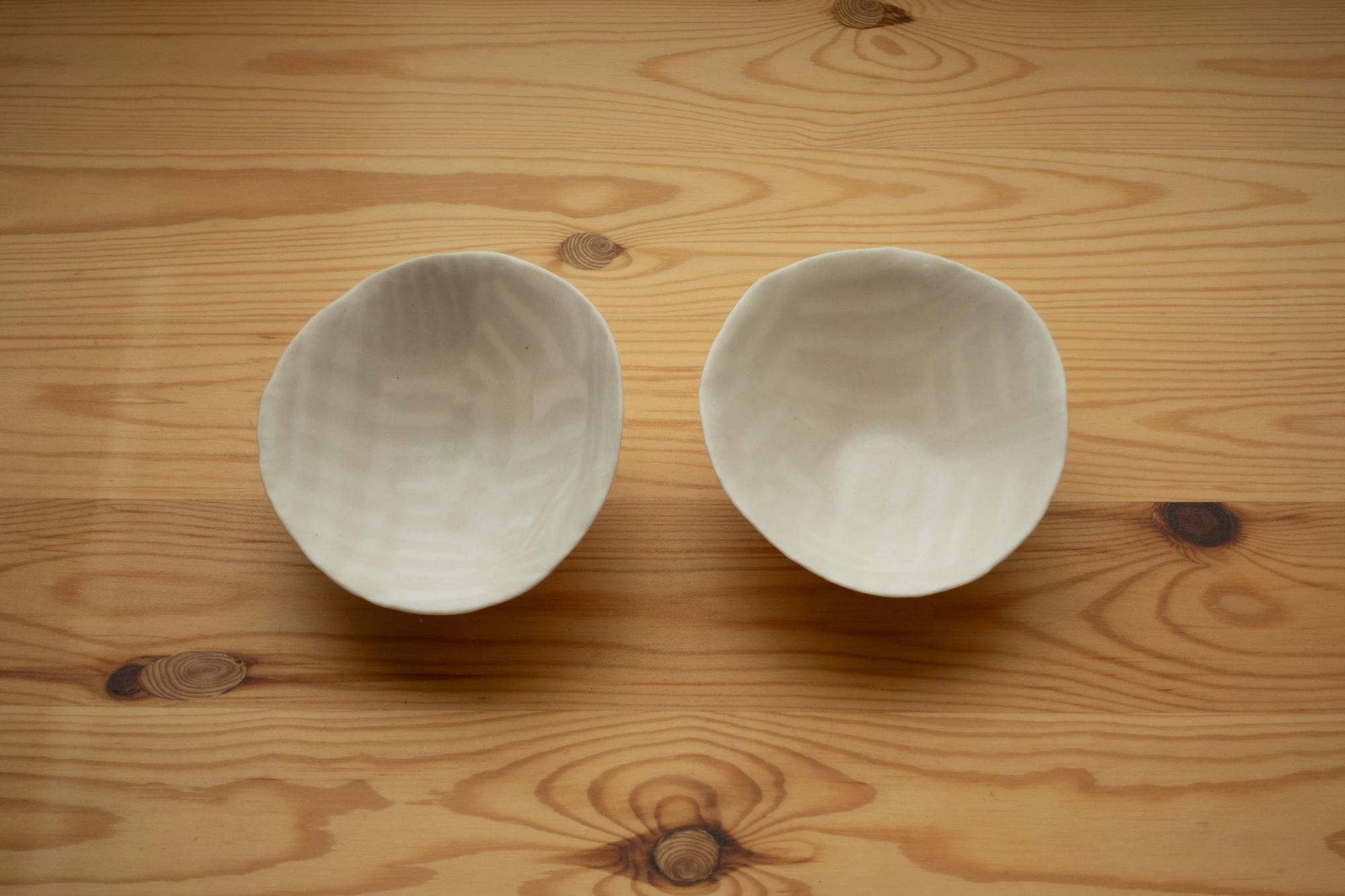
Ever since I started making nerikomi I have mostly kept the pieces unglazed because a) I never felt like I had the right glaze for them, and b) I feel like the pattern comes through nicer on unglazed pieces. This comes at the cost of the pieces not feeling quite as nice in the hand, unless I do some major sanding of each piece at the end, which isn't super feasible in its own way.
This predicament is something that I'd like to address, since I want my pieces to be functional. So far in my studio I have a couple clear glazes that I've mixed over the years: a gloss (too glossy), and a matte (too matte, and also too opaque). The matte glaze, given that I felt the surface was both too rough and hard to see through, has been left sitting untouched for several years.
Recently, I saw somewhere online saying that you can simply mix matte and gloss glazes to get a surface texture in between. This was a surprise to me because glaze chemistry is not typically so intuitive. However, since the matte glaze had been sitting around for so long without use, I decided to just pour some of my glossy glaze into the bucket and thin it out with some more water.
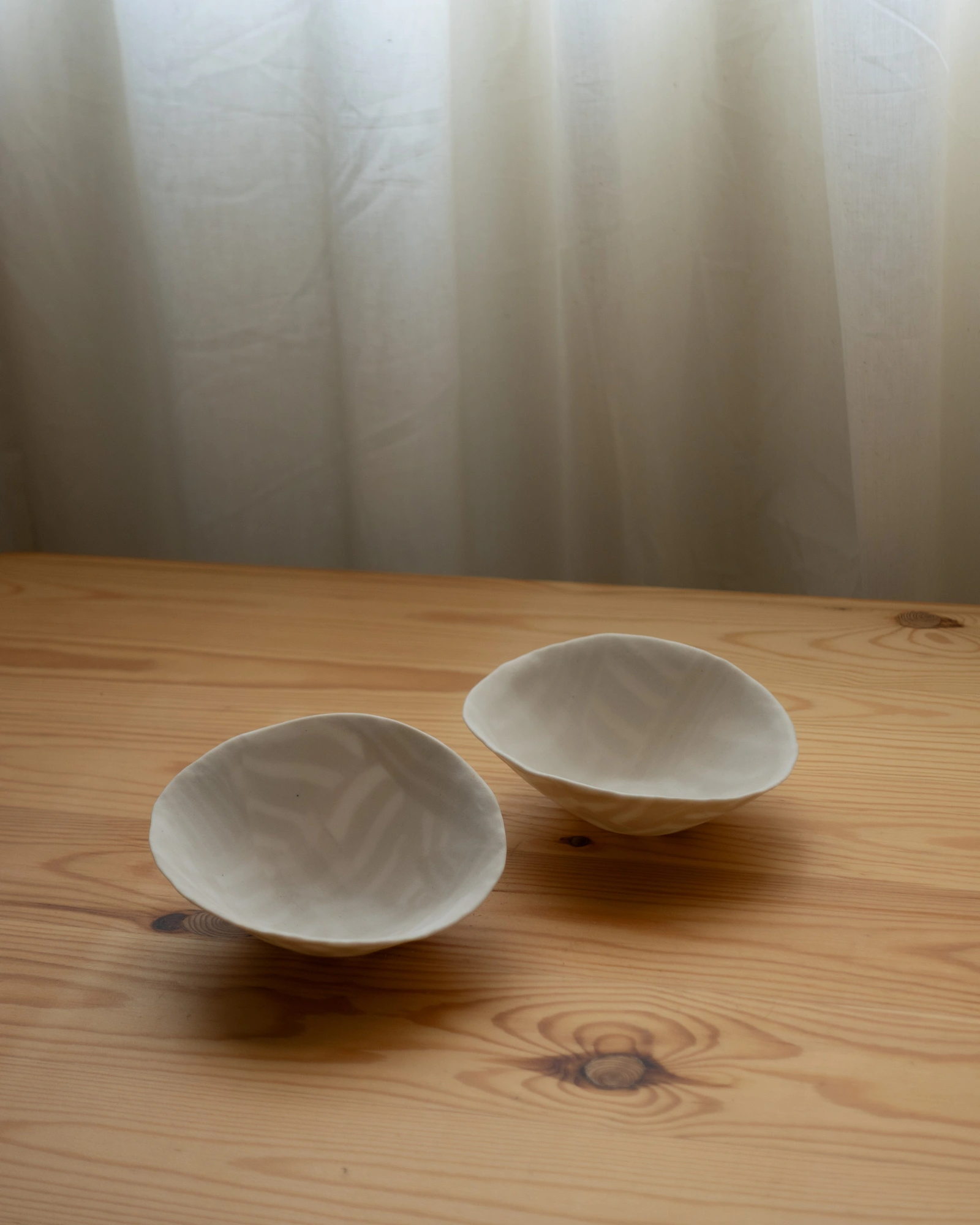
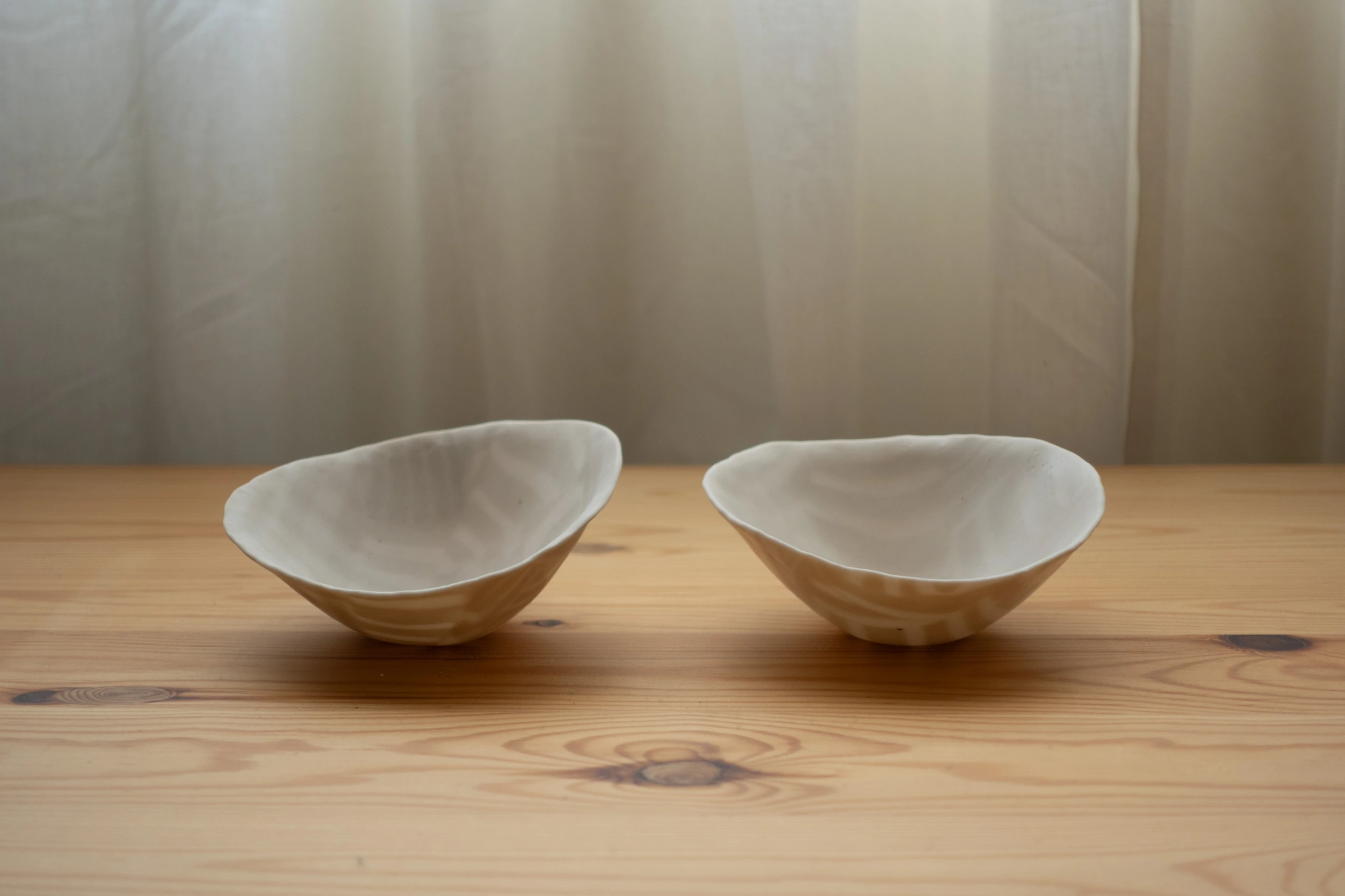
The result is a really buttery smooth, almost seashell-like glaze that you can still see through relatively well—at least on the white porcelain nerikomi pieces. At first I wasn't sure how to feel because it is definitely more muted/lower contrast than the unglazed piece work, but it's slowly growing on me, especially since the surface feels so much nicer.
Unfortunately, because this is just a mix of two glazes, and I didn't really keep track of the mix ratio (since I have no plans of mixing the matte glaze again) I probably won't ever be able to recreate this glaze. But for the time being I have plenty, and I have a feeling it will serve me very well with my explorations going forward.
—Tommy